The team count you pick before draft night shapes every week of your season. It sets how deep the talent pool runs, how much value sits on waivers, whether trades ever happen, and how close the standings stay in November. Get it right and the league feels competitive from Week 1 through the playoffs. Get it wrong and half your managers check out by the bye weeks.
Most redraft leagues land on 10 or 12 teams, but 8 and 14 both have a real place depending on who is playing and how they like to manage. Here is how size actually changes the game, a size-by-size breakdown, and a quick way to decide.

How league size changes the game
Four things move every time you add or remove a team.
Talent pool. There are roughly 32 startable running backs and a similar count of reliable wide receivers in any given season. Spread those across 8 teams and everyone starts studs. Spread them across 14 and managers are digging into committee backs and boom-or-bust flex plays by the middle rounds. Bigger leagues make talent scarce, which raises the stakes on every pick.
Waiver wire. In an 8-team league, the waiver wire is loaded. A starting-caliber receiver goes down and there are three solid replacements sitting there for free. In a 14-team league, the wire is thin. When a starter gets hurt, the handcuff or the next man up is often already rostered, so injuries hurt more and roster management matters more.
Trades. Smaller leagues make trading harder because everyone is already stacked, so nobody feels desperate enough to deal. Larger leagues create natural trade partners. A manager short at running back has something a receiver-heavy team wants, and both sides have a reason to talk.
Competitiveness. More teams means the gap between the best and worst rosters narrows, because no single manager can hoard talent. It also means more managers miss the playoffs, so your payout and playoff structure need to keep the bottom half engaged.
8-team leagues
An 8-team league is the easy-mode setup, and that is not an insult. Every starting lineup is stacked, scores run high, and the weekly matchups feel like heavyweight fights. This is the format for a group of casual friends, a first-year league, or a work league where not everyone wants a second job managing their roster.
The tradeoff is depth. Because so much talent goes unused, the waiver wire stays rich all season and a bad draft is easy to fix. Skill matters less here, which is a feature for casual groups and a drawback for competitive ones. If your managers are grinders who want the waiver wire to reward homework, 8 teams will feel too forgiving.
Best for: casual groups, first-time commissioners, and leagues where you want everyone fielding a fun roster.
10-team leagues
Ten teams is the balance point and the most common redraft size for a reason. Every team still starts a strong core, but the talent pool tightens enough that draft position and in-season moves matter. The waiver wire has real value without being a graveyard. Trades happen. Byes and injuries sting without wrecking your season.
Ten also plays nicely with playoff math. A top-six or top-four bracket keeps most of the league alive deep into the schedule, and you avoid the awkward tie-break problems that come with odd structures. If you are not sure what to pick, this is the safe default.
Best for: mixed groups of casual and serious managers who want competitive balance without a punishing wire.
12-team leagues
Twelve teams is the standard for competitive and experienced leagues. The starter pool gets genuinely scarce, so draft prep pays off, sleeper picks win seasons, and a smart waiver claim can flip your year. Handcuffing your star running back becomes a real strategic choice because the backup has actual standalone value.
This size rewards managers who show up every week. It also punishes the ones who do not, which is exactly what a serious group wants. The risk is engagement. With 12 rosters, more managers finish out of the money, so your payout structure needs to give the middle of the pack something to play for. A consolation bracket or a highest-points-scored side pot keeps the non-playoff teams honest.
Best for: experienced, engaged groups that want draft prep and waiver work to decide the title.
14-team leagues
Fourteen teams is deep-league territory, built for hardcore managers who want scarcity to define the season. Starting rosters get thin fast. By the middle rounds you are drafting handcuffs, rookie fliers, and high-upside backups. The waiver wire is picked clean, so holding the right bench stash is a genuine edge, and every injury sends a ripple through the whole league.
This format is the most demanding and the least forgiving. A single blown draft pick or a missed waiver window can sink you. It is a blast for a group that treats fantasy like a hobby and pays attention all week. It is miserable for anyone who wants to set a lineup and forget it. Only run 14 if you are confident all 14 managers are committed for the full season, because a couple of checked-out teams in a deep league drags everyone down.
Best for: hardcore, high-commitment groups that want maximum strategy and scarcity.
Quick comparison
| Size | Talent pool | Waiver value | Trade activity | Best fit |
|---|---|---|---|---|
| 8 | Very deep | High | Low | Casual and first-year groups |
| 10 | Balanced | Moderate | Moderate | Mixed skill, competitive balance |
| 12 | Scarce | High | High | Experienced, engaged managers |
| 14 | Very scarce | Very high | Very high | Hardcore, high-commitment groups |
How to decide
Start with your people, not the number. Ask three questions.
How committed is the group? If managers will check the wire on Wednesday and stress over a flex decision, you can go 12 or 14. If half of them barely remember to set a lineup, stay at 8 or 10 so a light touch still fields a competitive team.
How many players do you have? Do not add teams just to hit a round number. Fourteen committed managers beat 14 slots where two are half-empty. If you have 11 real managers, run 10 and keep a sub on standby, or run 12 and recruit one more you trust.
What kind of season do you want? High-scoring shootouts every week point to 8 or 10. A grind where roster management decides the title points to 12 or 14.
When you are torn, size down. A slightly shallower league that stays engaged all year beats a deep one where teams check out in October.
Setting a fair draft order once you pick a size
Whatever number you land on, you still have to decide who picks first, and that choice matters more the deeper your league runs. In a 14-team draft the gap between the 1.01 and the 1.14 is real, so the order has to be fair and it has to look fair to everyone in the room.
A commissioner quietly assigning slots invites suspicion, even when it is honest. So does a group text where someone claims they never saw the coin flip. A neutral, verifiable method keeps the season clean before it starts.
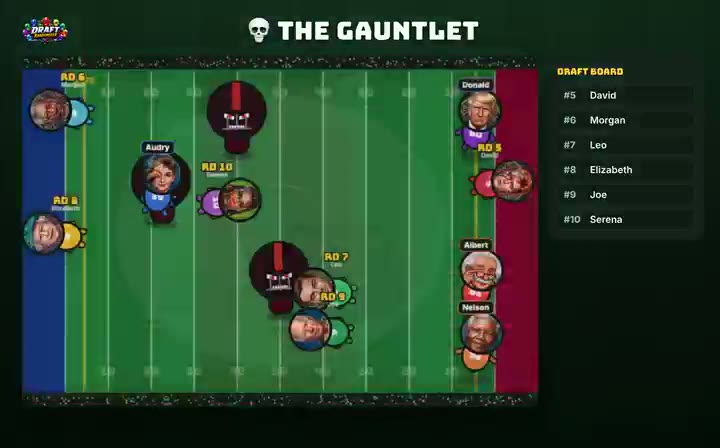
That is where Draft Randomizer fits. It is a free draft order randomizer with no sign-up that supports 2 to 14 players, so it covers 8, 10, 12, and 14 team leagues without any workaround. You pick one of 5 battle styles, and the outcome decides your pick order. Every draft records a shareable, spoiler-free video, so you can drop the link in the group chat and let everyone watch the order get set without anyone doubting the result. See how it works for the full rundown.
If anyone questions whether the randomization is legit, point them to the published fairness audit, which documents 10,000 simulated drafts so you can confirm every slot has an equal shot. The core tool is free. A one-time $4.99 Pro upgrade (not a subscription) unlocks the extras if you want them.
FAQ
What is the most common fantasy football league size?
Ten and 12 teams are the two most common redraft sizes. Ten is the balanced default for mixed groups, while 12 is the standard for experienced, competitive leagues that want draft prep and waiver work to matter.
Is an 8-team or 12-team league better?
Neither is better outright. An 8-team league keeps every roster stacked and the waiver wire deep, which suits casual groups. A 12-team league makes talent scarce and rewards active managers, which suits serious ones. Match the size to how committed your group is.
Can I run a 14-team fantasy league?
Yes, and it delivers the deepest, most strategic season, but only if all 14 managers are committed for the full year. A couple of inactive teams in a 14-team league drags down the experience for everyone, so confirm your roster of managers before you commit to that size.
Does league size change how I set the draft order?
The method stays the same, but fairness matters more as the league grows, because the gap between the first and last pick widens. A neutral randomizer that everyone can verify keeps the process clean whether you have 8 teams or 14.
Is a 10-team or 12-team fantasy league better?
A 10-team league keeps every roster deep and the waiver wire loaded, so even casual managers stay competitive. A 12-team league spreads the talent thinner, which rewards draft prep and active management. Pick 10 for a balanced, forgiving league and 12 when your group wants skill to decide more games.
How many people do you need for fantasy football?
You need at least 4 for a functional league, but 8 to 12 is the sweet spot. Fewer than 8 and rosters get so loaded that the season lacks tension. Aim for a committed group of 10 if you are not sure, since it balances depth, competition, and the odds everyone finishes the year.
Pick your size, lock your managers, and set the order everyone trusts. Spin up a free, provably fair draft order at Draft Randomizer before your next draft night.